

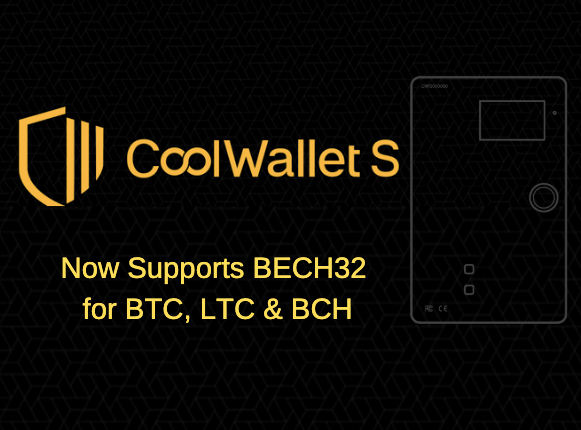
CoolWallet S, the groundbreaking Bluetooth hardware wallet, adds BECH32 address support for Bitcoin, Litecoin and Bitcoin Cash transactions.

CoolWallet S users can now send Bitcoin (BTC), Litecoin (LTC) and Bitcoin Cash (BCH) to BECH32 addresses from our hardware wallet.
Please note though that since CoolWallet S users will still be sending funds from non-BEC32 addresses, it will not impact transaction speeds or fees.
How to Identify BECH32 addresses
- Bitcoin (BTC) - begins with "bc1"
- Litecoin (LTC) - begins with "ltc1"
- Bitcoin Cash (BCH) - begins with "q*" (read more)
What is BECH32?
Bech32 is a recent Bitcoin address protocol (released in 2017) in line with Bitcoin Improvement Protocol BIP 0173. It's now also used with other Bitcoin-centric cryptocurrencies such as Litecoin and Bitcoin Cash.
BECH32 is slowly gaining traction due to its potential for faster transaction speeds at lower transaction fees. It is also used for Segwit transactions just like P2SH addresses, but are smaller in size.
How are P2PKH, P2SH and BECH32 Bitcoin addresses different?
At the moment, there are 3 main types of Bitcoin addresses in use:
P2PKH, P2SH, and BECH32, which respectively begin with either “1”, “3”, or “bc1”.
Currently, not many service providers (VASPS) or wallet makers offer support for all three.
Why do we need different Bitcoin address types?
Crypto public addresses help crypto users to safely send virtual assets to other users. Each address is between 26 to 35 characters long and consists of a combination of alphanumeric characters (letters and numbers). They normally begin with a letter or number that identifies their specific cryptocurrency.
Just as the Internet has evolved to use different protocols (e.g. IPv4/ IPv), Bitcoin addresses also have different formats, based on changes in the technology driving it. Usually, it's OK to send BTC to any address, without needing to worry about any compatibility issues. However, you might pay more in transaction fees or it makes take longer to process.
P2PKH vs P2SH vs BECH32
1. P2PKH address (begins with "1") - the legacy address
Example: 1BvLXSETsmqOtCtWn5Au3m4GFg7xJaMWN9
P2PKH (Pay-To-Public-Key-Hash) was the original Bitcoin address format and is often referred to as its legacy address format. It's still in common use today, however, these addresses are not compatible with Segwit, though you can still send to Segwit addresses without any problems. Unfortunately, you might pay a larger fee due to the bigger transaction size.
2. P2SH address (begins with "3") - for multi-sig transactions
Example: 3L49uLwB1BsTWvcXyeUA94eACt2VUNutUk
"Pay-To-Script-Hash" or P2SH addresses was a necessary evolutionary protocol created for multi-signature wallets, where more than one key might be required to authorize a transaction. P2SH can also be used to allow anyone, or no one, to spend the asset funds.
3. BECH32 address (begins with "bc1") - an "updated P2SH" protocol
Example: bc1qe5rjaupmkyaynr5230387p67q5246sfsrp7tuy
BECH32 addresses are essentially updated P2SH addresses to make Segwit transactions cheaper and faster. See the beginning of this article for a closer look.
Looking for more BECH32 info?
- https://en.bitcoin.it/wiki/Bech32
- https://en.bitcoin.it/wiki/Bech32_adoption
- https://bitcoin.stackexchange.com/questions/78930/benefits-of-bech32-addresses
Share:
Stone Cold: 3 Rules To Secure Your Crypto Hardware Wallet's Recovery Seed
Crypto Dusting Attacks on Litecoin and Bitcoin Wallets: Your Need-To-Know Guide