

![Top Crypto Security Risks in 2026 [Guide]](http://www.coolwallet.io/cdn/shop/articles/CryptoSecurityRisks2026_en.webp?v=1770714023&width=1600)
This article was written by by Werner Vermaak.
Contents
- Social Engineering and Phishing
- Address Poisoning Scams
- Impersonation and Pretexting
- Malicious Browser Extensions
- Fake Airdrops and Giveaway Scams
- AI-Enabled Scams and Deepfakes
- “Pig Butchering” Romance Scams
- Scareware and Panic Tactics
- Baiting Schemes
- Developer Targeting and Supply Chain Risk
- Why These Threats Matter in 2026
- How CoolWallet Navigates Emerging Risks
- CoolWallet Range: Go or Pro?
- Conclusion
As Web3 usage expands in 2026, security risks continue to multiply in sophistication and scale. The threat landscape now extends far beyond simple scams to include advanced AI-enabled attacks and highly targeted campaigns that exploit human behavior and system flaws alike.
According to a comprehensive 2026 crypto security threat guide from Kerberus, a top browser-based, real-time Web3 security extension, Web3 ecosystems face a wide spectrum of digital threats that can compromise wallets, smart contracts, private keys, and even developers themselves.
Understanding the most prevalent risks facing Web3 users and developers today is essential for safeguarding digital assets.
Below, we outline 10 of the most notable Web3 security threats shaping 2026 and explain how users can proactively make sure they stay safe with CoolWallet.

1. Social Engineering and Phishing

Social engineering remains the most pervasive threat in Web3, exploiting human psychology rather than technical vulnerabilities. Phishing attacks have evolved into sophisticated operations where attackers impersonate trusted platforms and trick users into sharing sensitive credentials or signing harmful transactions. These schemes now include cloned decentralized applications, fake support channels on social media, and frauds delivered through highly tailored messages across email and messaging apps.
2. Address Poisoning Scams
Address poisoning is a deceptive technique where attackers send tiny, seemingly innocuous transactions from fake wallet addresses that resemble legitimate ones. Later, users copying addresses from recent activity may mistakenly send assets to attacker-controlled wallets, resulting in irreversible loss.

Source: Chainalysis
Only recently, one poor investor lost $50m when they sent crypto to the wrong address.
3. Impersonation and Pretexting

Attackers increasingly use pretexting tactics, posing as customer support or project administrators to extract seed phrases, private keys, or transaction approvals. Impersonators often leverage social media and fake channels to escalate urgency, making victims more likely to comply without verification.
4. Malicious Browser Extensions

Fake browser extensions that purport to offer security enhancements or wallet utilities frequently contain malicious code designed to steal credentials or private keys. Once installed, these extensions can act as wallet drainers or telemetry collectors, providing persistent access to attackers.
5. Fake Airdrops and Giveaway Scams
Scammers deploy “free token” incentives to lure users into connecting their wallets to malicious smart contracts. These contracts may look legitimate but are engineered to drain assets once wallet permissions are granted. Some campaigns employ AI to generate convincing promotional content or celebrity endorsements.
6. AI-Enabled Scams and Deepfakes
In 2026, artificial intelligence (AI) tools have become double-edged swords. They are now used to create highly convincing phishing messages, automated scam agents, and deepfake content that can impersonate real people or brands with alarming fidelity. AI agents often adapt their tactics in real time based on user responses.
7. “Pig Butchering” Romance Scams
These emotional manipulation scams involve attackers building trust over weeks or months before introducing fraudulent investment opportunities, exploiting victims’ affections to extract funds. Once funds are deposited, withdrawals fail or accounts disappear.
8. Scareware and Panic Tactics
Scareware exploits fear of loss by presenting false warnings about wallet compromise or malware infections. These fraudulent alerts often redirect users to malicious sites where attackers harvest credentials or push malware installations.

Source: Kaspersky
9. Baiting Schemes
Baiting attacks leverage human responses to perceived opportunity, offering too-good-to-be-true bonuses, rewards, or exclusive perks that entice victims into exposing private data or signing risky transactions.

Source: Kaspersky
10. Developer Targeting and Supply Chain Risk
Hackers no longer limit their targets to everyday users. Sophisticated groups now focus on Web3 developers and infrastructure, recognizing that a single compromised codebase or developer workstation can expose entire platforms or protocols. Recent reporting highlights AI-generated malware campaigns aimed at blockchain developers, underscoring the expanding attack surface beyond user wallets alone.
Why These Threats Matter in 2026
Web3’s decentralized design offers users unprecedented control over digital assets but also removes centralized safety nets. Unlike traditional banking, blockchain transactions are irreversible on confirmation. Once a seed phrase, private key, or transaction approval is compromised, recovery becomes virtually impossible. Real-world data underscores the stakes: Web3 thefts continue to soar, with billions of dollars lost to hacks and scams in recent years.
Human errors and behavioral vulnerabilities remain dominant drivers of loss, often because conventional security tools fail to address real-time threats or evolving social engineering tactics. According to analysis from Kerberus, only a fraction of existing Web3 security tools offer real-time user protection, leaving many users exposed even with basic precautions in place.
How CoolWallet Navigates Emerging Risks

Battle-tested hardware wallets like CoolWallet (protecting crypto users since 2014) play a vital role in protecting digital assets by separating key signing from potentially compromised software environments.
Here’s why:
- Unlike software wallets, hardware wallets store private keys offline.
- This massively reduces exposure to online threats such as phishing, malicious extensions, and malware.
- Even when attackers trick users into connecting to malicious sites, their private keys remain protected inside the hardware device and never exposed in a vulnerable browser environment.
Private Key Isolation
CoolWallet stores crypto private keys in an EAL6+ secure element within the device. This means that even if a connected computer or mobile device is compromised, the private keys used for signing transactions never leave the hardware.

This protects against keyloggers, clipboard hijackers, and similar threats that target key material. Hardware isolation fundamentally reduces the attack surface for many of the listed threats where credential theft is the primary objective.
Transaction Verification
In addition to isolating keys, CoolWallet enables out-of-band transaction verification. Before any transaction is finalized, users can review and approve details directly on the hardware wallet itself, ensuring that they are not unknowingly approving malicious contracts or unauthorized transfers triggered through phishing sites or fake DApps.
Multi-Layer Protection
CoolWallet implements additional security layers such as encrypted Bluetooth communication, and support for multi-signature workflows. These features add friction against unauthorized access and make automated attacks more difficult. Multiple layers of authentication mean that even sophisticated social engineering campaigns struggle to bypass protections without explicit user consent on the device.
CoolWallet’s built-in Web3 browser also enjoys integrated support by security tool Blockaid.
User Education and Vigilance
Security tools are effective, but user behavior remains a core vulnerability. CoolWallet complements hardware protections with clear guidance on best practices, emphasizing cautious handling of URLs, avoiding copying addresses from unverified sources, and maintaining robust operational security habits. In a landscape where AI-enabled scams adapt quickly, user education is an essential frontline defense.
CoolWallet Range: Go or Pro?

CoolWallet Pro
CoolWallet Pro is a hardware wallet designed for crypto users who want strong security while still using DeFi, NFTs, and multiple blockchains. It stores private keys inside a CC EAL6+ certified secure chip, so sensitive data never leaves the device or gets exposed to malware, phishing sites, or infected computers.
The wallet connects to your phone through encrypted Bluetooth, but only signed transaction data is shared. Before any transfer happens, you must confirm it on the physical device using PIN or biometric protection. This extra step helps stop unauthorized transactions triggered by fake websites or malicious DApps.
CoolWallet Pro also supports staking, token swaps, and WalletConnect access to decentralized apps. This means users can interact with Web3 services while keeping funds in cold storage, reducing the risk of wallet drainers, credential theft, and other common attack methods.
CoolWallet Go
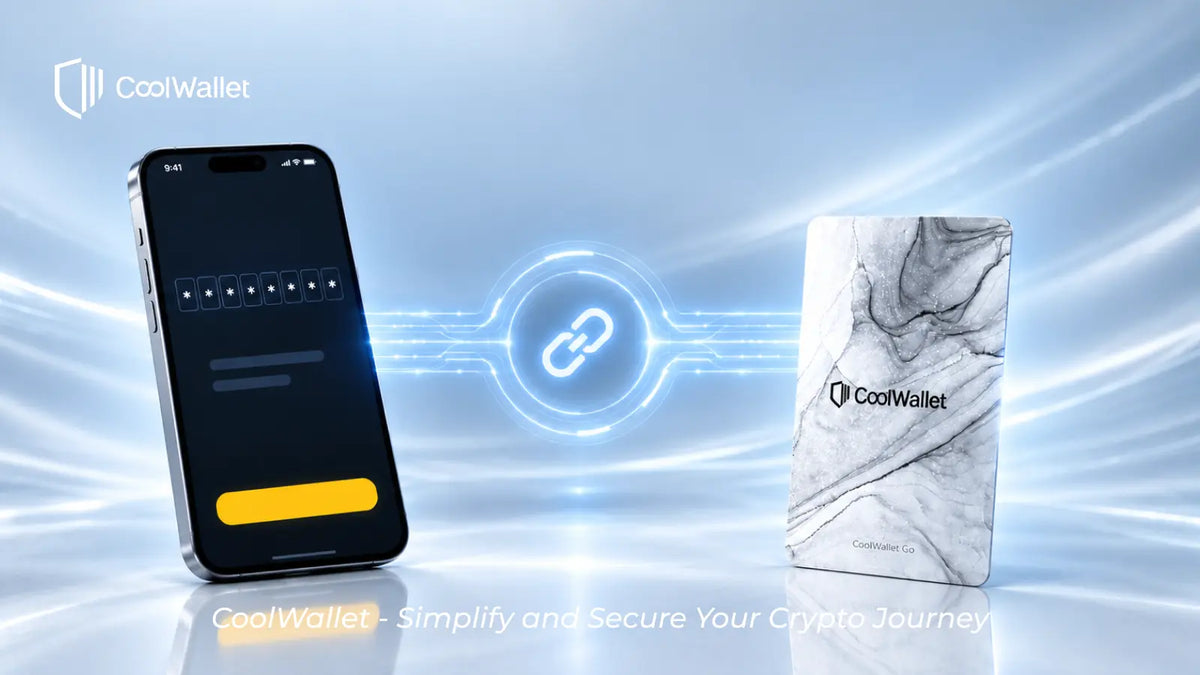
CoolWallet Go extends CoolWallet’s hardware-first security approach with a simplified cold storage device designed for everyday Web3 use. The card-style wallet generates and stores private keys inside a CC EAL6+ certified secure element, keeping sensitive key material fully offline and out of reach of malware, phishing sites, or compromised browsers.
Instead of relying on cables or constant wireless connections, CoolWallet Go uses tap-to-sign NFC communication, which reduces exposure to remote attack vectors while still allowing convenient transaction approvals through the companion app.
A key security improvement is its seedless backup card system, which removes the need to write down recovery phrases that are frequently targeted in social engineering and impersonation scams.
By combining offline key isolation, secure transaction approval, and safer recovery methods, CoolWallet Go helps users interact with DeFi, NFTs, and DApps while minimizing the risk of wallet drainers and credential theft.
Conclusion
The Web3 security landscape in 2026 will see sophisticated threats that blend psychological manipulation, technical exploits, and AI automation. By using CoolWallet’s hardware wallet and app defenses, as well as using real-time Web3 transaction monitoring, users can protect their digital assets in very dangerous environments.
Share:
CoolWallet Partners with Tronify to Simplify and Lower TRON Token Transfer Costs
What Is Zcash (ZEC)? Why Is It Considered a Privacy Upgrade to Bitcoin?