


Content
Introduction
For years, Bitcoin has been known as a “store of value” asset. Most people buy it, hold it, and wait for the price to rise. But recently, you may have seen something surprising:
“Stake your BTC and earn rewards.”
If Bitcoin runs on a Proof of Work (PoW) consensus mechanism and has no native staking function, how could BTC staking even be possible?
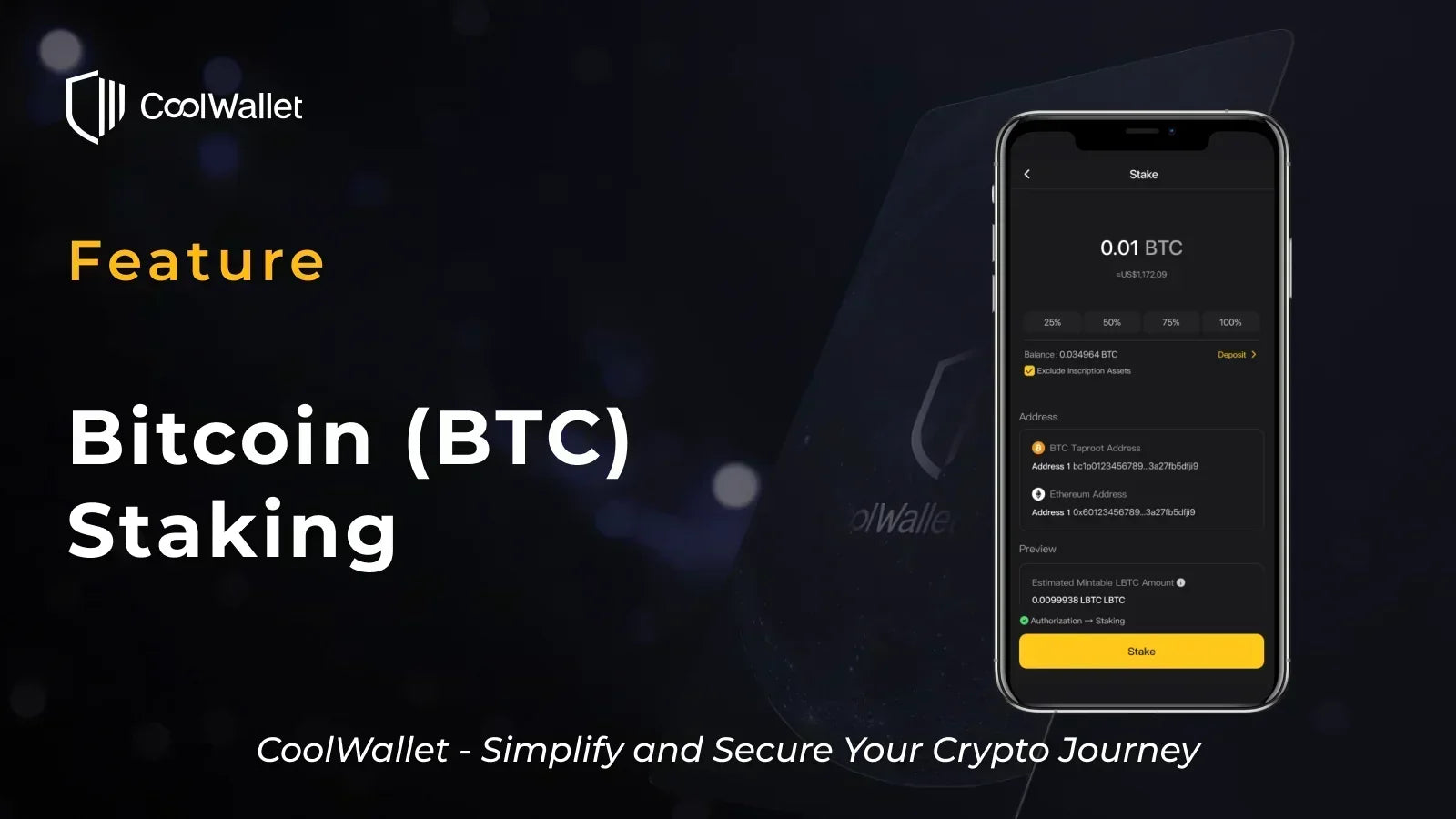
In this article, we’ll break things down in simple terms. You’ll learn what “BTC staking” actually means, the different forms it can take, and how it’s now possible to earn real BTC rewards while still holding Bitcoin, by using Lombard’s Bitcoin staking model as an example.
Let’s get started.
What Is BTC Staking
When people talk about staking, they are usually referring to Proof-of-Stake (PoS) blockchains like Ethereum, Solana, or Cosmos. On these networks, users lock up tokens to help secure the chain and earn rewards in return.
Bitcoin, however, works differently. It runs on Proof of Work (PoW), where miners use hardware to validate transactions. Because Bitcoin doesn’t rely on staked coins for security, the Bitcoin blockchain has no native staking mechanism.
So how is BTC staking even possible?
Today, when someone says “BTC staking,” they may be referring to one of several very different things. Understanding the differences is important, especially for beginners.
Below are the three main categories.
Real BTC Staking
This is the most accurate form of “Bitcoin staking.” In this model, users use native BTC as economic security for Proof-of-Stake networks. These networks rely on the staked Bitcoin to strengthen their security, and in return, they pay rewards for that protection.
Stakers usually receive a liquid representation of their staked BTC, such as LBTC, which stays pegged 1:1 to Bitcoin but gradually increases in value as rewards accumulate.
This approach can be decentralized or non-custodial depending on the provider, and it represents the true evolution of BTC staking in the crypto ecosystem.
CeFi BTC Staking
Some centralized exchanges or custodial platforms use the word “staking” for marketing, but technically, this is BTC lending, not staking.
The mechanism is straightforward: users deposit their BTC into a centralized platform, and the platform then lends out that BTC or uses it internally to generate returns. In exchange, depositors receive a fixed or variable yield.
Because this model is essentially a lending product controlled entirely by the platform, users take on higher custodial and counterparty risk, and the yield depends solely on the platform’s operations and financial health. While this approach can be convenient, it requires placing full trust in the centralized provider.
Wrapped BTC Earnings in DeFi
In this model, BTC is converted into a wrapped version, such as WBTC or tBTC, on networks like Ethereum. Once wrapped, it becomes compatible with DeFi protocols and can be used for earning opportunities, including lending on platforms like Aave, providing liquidity on automated market makers such as Curve or Uniswap, or participating in various yield-farming strategies.
These methods are popular among DeFi users, but they are not Proof-of-Stake staking. The returns come from DeFi activity and smart contract interactions, not from securing a PoS network, and they rely on the safety of the wrapping mechanism and the underlying smart contracts.
What Is Lombard’s Bitcoin Staking
With these concepts in mind, let’s take a closer look at Lombard’s Bitcoin staking model, which demonstrates how native BTC can earn rewards through a secure and decentralized staking mechanism.
How Lombard’s Bitcoin Staking Works
Lombard’s Bitcoin staking model allows users to convert native BTC into a yield-bearing form called LBTC. When users deposit BTC through Lombard, the Bitcoin is locked on the Bitcoin blockchain using a time-locked script, and LBTC is issued as the liquid token that represents ownership of this locked BTC.
Through the Babylon protocol, the locked BTC is registered as economic collateral and delegated to participating Proof-of-Stake networks. This connection allows Bitcoin to serve as a security layer for these networks without ever leaving the Bitcoin blockchain.
When users decide to unstake, they simply redeem LBTC back into native BTC. The difference between the amount originally staked and the amount redeemed represents the rewards earned over the staking period. In short, Lombard converts BTC into LBTC and enables users to participate in PoS network security through a simple, secure, and decentralized mechanism.
Where the Rewards Come From
The rewards earned through Lombard’s Bitcoin staking originate from PoS networks that choose to use Bitcoin as part of their economic security. When BTC is locked through the Babylon protocol, it becomes valuable collateral that strengthens these networks, and in return, they pay rewards according to their incentive models. These rewards are typically issued in each network’s native token.
Instead of distributing multiple reward tokens to users, Lombard aggregates all rewards, converts them into BTC, and reflects the added value directly in LBTC. As rewards accumulate, each LBTC becomes redeemable for more BTC over time, with no manual claiming required. In essence, PoS networks pay for Bitcoin’s security, and Lombard delivers that value back to users as a seamless, BTC-denominated yield.
How BTC Is Used as Economic Security for PoS Networks
Proof-of-Stake networks rely on staked assets for security. Because BTC is the most secure and valuable digital asset, using it as collateral significantly increases the economic cost of attacks and improves overall network resilience. When users stake BTC through Lombard, the Bitcoin is locked on the Bitcoin blockchain and registered via the Babylon protocol as economic collateral.
In this setup, the locked BTC functions like a financial guarantee. As long as the network operates honestly, the BTC remains untouched, but its economic weight helps deter malicious behavior. Instead of relying solely on their own native tokens, PoS networks can tap into Bitcoin’s superior liquidity and security to reinforce their consensus.
What Are the Costs
Lombard’s Bitcoin staking model is designed to be simple for users, and the costs involved are straightforward. When depositing or redeeming BTC, users pay the standard Bitcoin network transaction fees required to move funds on-chain. These fees vary depending on network congestion but are not unique to Lombard.
In addition, Lombard applies a protocol fee to the staking rewards earned through PoS networks. This fee is taken only from the yield generated, not from the user’s original BTC principal. The locked BTC itself is not subject to slashing, reducing one of the common risks associated with traditional Proof-of-Stake staking.
Overall, users mainly incur normal Bitcoin network fees and a reward-based protocol fee, making the cost structure predictable and transparent.
Benefits of Lombard’s Bitcoin Staking
Lombard’s Bitcoin staking model offers several advantages that make it accessible, secure, and rewarding for BTC holders. By converting BTC into LBTC, users can earn yield while maintaining Bitcoin-denominated exposure and enjoying the flexibility of a liquid staking token.
-
Earn BTC-denominated rewards
LBTC increases in value over time as staking rewards accumulate, allowing users to redeem more BTC than they originally deposited. -
LBTC can be freely managed
During staking, you may freely hold or manage your LBTC, including using it in DeFi for lending, liquidity provision, or trading. Rewards continue to accumulate based on your current LBTC balance.
-
High liquidity with no traditional lock-up
LBTC can be transferred, used, or redeemed for native BTC at any time, including the accumulated yield.
-
Secure on-chain BTC reserves
The underlying Bitcoin remains locked on the Bitcoin blockchain through time-locked scripts, providing transparency and strong security guarantees. -
Easy participation without technical complexity
No validator setup, no mining hardware. Simply deposit BTC and start earning. -
Expand Bitcoin’s utility
BTC becomes a productive asset that helps secure PoS networks, increasing Bitcoin’s role in the broader blockchain ecosystem.
These benefits make Lombard’s model a simple and powerful way for BTC holders to participate in network security and earn rewards in the asset they trust most.
Final Thoughts
Lombard’s Bitcoin staking model shows that BTC can be more than a passive store of value. By locking Bitcoin on-chain, connecting it to PoS networks through Babylon, and returning rewards through LBTC, users can earn yield while staying fully exposed to BTC. It’s a simple, secure, and modern way to let Bitcoin do more.
FAQs
Q1. Where does BTC staking differ from other traditional PoS staking, such as ETH or SOL staking?
Traditional PoS staking happens natively on the blockchain itself. Validators lock ETH, SOL, or other native tokens to secure the network and earn rewards.
BTC staking is different: Bitcoin doesn’t have native staking. Lombard uses the Babylon protocol to lock BTC on the Bitcoin blockchain and delegate its economic value to external PoS networks. This allows BTC to earn rewards without changing Bitcoin’s Proof-of-Work design.
Q2. Do the stakers need to retrieve rewards manually?
No. Lombard automatically aggregates all rewards earned across PoS networks, converts them into BTC, and reflects the value directly in LBTC.
LBTC simply becomes redeemable for more BTC over time, so users never need to claim rewards manually.
Q3. Is my BTC locked when I stake through Lombard?
Yes, the BTC is locked on the Bitcoin blockchain using a time-locked script, but users receive LBTC, a liquid, yield-bearing representation of the locked BTC.
LBTC can be transferred or redeemed at any time, allowing users to maintain liquidity while the underlying BTC remains securely locked.
Q4. What is LBTC exactly?
LBTC is a liquid, yield-bearing token that represents ownership of the BTC locked through Lombard.
Its redemption value increases over time as staking rewards accumulate. Holding LBTC is what allows users to earn BTC-denominated yield.
Q5. What happens if one of the PoS networks fails or stops paying rewards?
If a PoS network reduces or stops rewards, the total yield for LBTC holders may decrease, but the underlying BTC remains unaffected.
The locked BTC is not subject to slashing, so users’ principal is not penalized for validator misbehavior or network issues.

Share:
How to Stake TRON (TRX)
Why BTC Stakers Should Pay Attention to Lombard Lux Points