

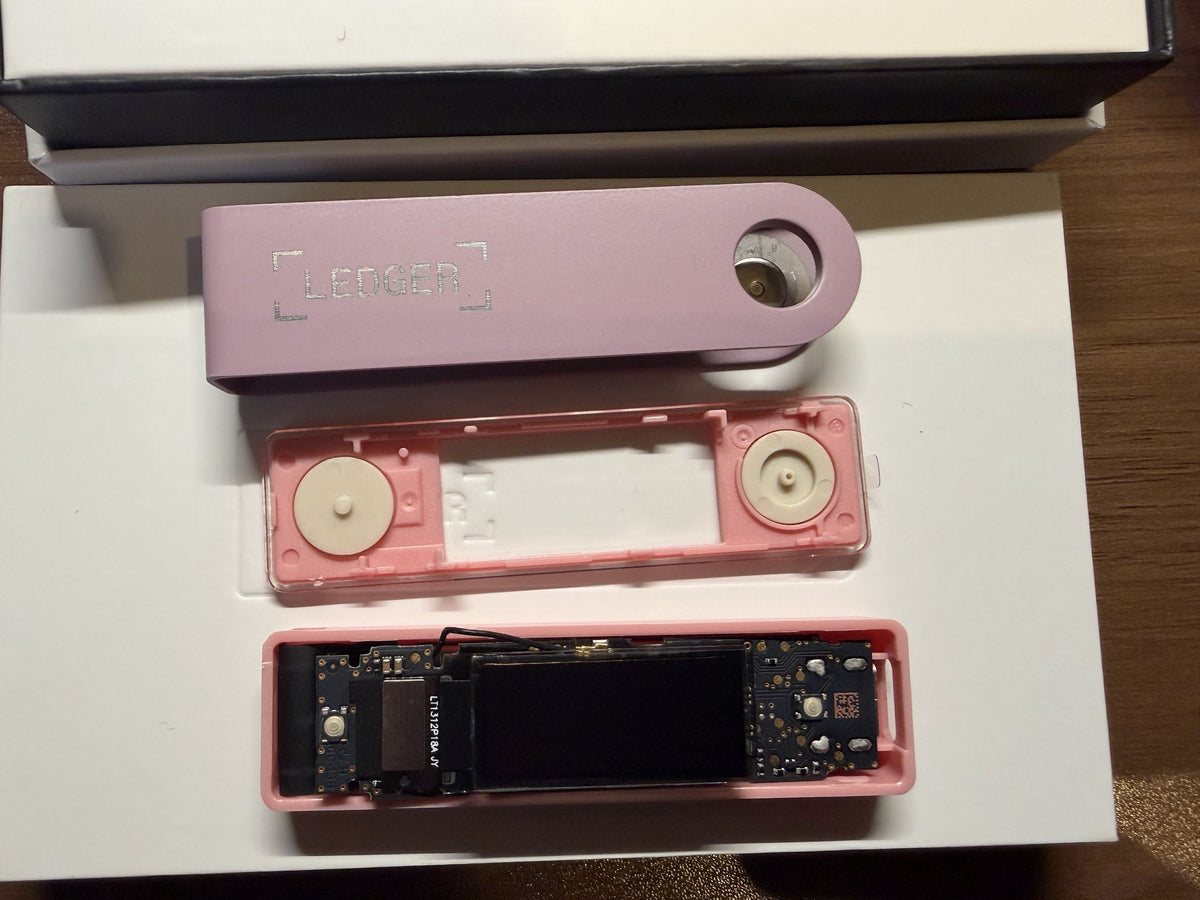
(Photo Source:: Mark Karpelès (@MagicalTux) / X)
Recent reports of stolen crypto assets involving some Ledger users have raised concerns about hardware wallet supply chain security.
According to public reports, Ledger is investigating losses reported by users who purchased devices through CryptoBilis, a reseller in Southeast Asia. Ledger has also requested that the reseller temporarily suspend sales and shipments while the investigation continues.
The full attack method, scope of impact, and responsibility have yet to be conclusively established.
The incident highlights an important security consideration: Protecting private keys inside a secure chip is essential, but hardware wallet security must also account for the possibility of physical tampering before a device reaches its owner.
What Is a Supply Chain Attack?
A supply chain attack occurs when an attacker compromises a product at some point during manufacturing, transportation, storage, distribution, or sales.
Such attacks may involve malicious software, replaced components, or devices that have been physically modified before reaching customers.
For hardware wallets, one potential threat is a hardware implant.
In this scenario, an attacker gains access to a device, installs unauthorized electronic components inside it, and repackages it before delivering it to an unsuspecting user.
This is more than a theoretical risk.
Hardware security researcher Joe Grand has publicly documented his reverse engineering of a real-world malicious hardware implant discovered inside a Ledger Nano X.
His research demonstrates how additional electronic components can potentially intercept sensitive information during a hardware wallet's operation.
However, this previously documented research should be distinguished from the recent Ledger-related asset theft investigation. Any specific connection between the two requires further verification.
Why Isn't a Secure Element Alone Enough?
A Secure Element is designed to protect critical secrets, including private keys.
However, a hardware wallet consists of more than its Secure Element. It also contains circuitry, interfaces, and other electronic components.
Think of the Secure Element as a highly protected safe.
An attacker may not need to break into the safe itself. Instead, they may attempt to intercept sensitive information when it is displayed, transmitted, or used elsewhere in the device.
This is why hardware wallet security should be evaluated beyond the chip's security certification.
The physical design of the entire device, including its resistance to unauthorized modification, also matters.
How Does CoolWallet Make Malicious Hardware Implants More Difficult?
CoolWallet's card-shaped design considers both portability and physical tamper resistance.
One of its key structural defenses is its cold-pressing encapsulation technology.
1. Cold-Pressing Encapsulation Makes Disassembly and Restoration More Difficult
CoolWallet uses cold-pressing encapsulation technology to integrate electronic components within its card structure.
According to CoolWallet's official security documentation, its tamper-resistant construction means that physical disassembly may render the device inoperable.
Public technical documentation for CoolWallet S also describes how physical tampering can leave visible damage.
For an attacker attempting to install malicious hardware, the challenge extends beyond opening the device.
They must also find a way to modify the internal components, maintain normal functionality, and restore the device to an appearance that does not raise suspicion.
Cold-pressing encapsulation increases the difficulty of this entire process, from disassembly to modification and restoration.
2. An Ultra-Thin Card Structure Limits Space for Additional Components
CoolWallet Pro measures just 0.8 mm in thickness, making it comparable in size to a standard credit card.
From a physical design perspective, this ultra-thin structure limits the available space for additional circuits, wiring, and transmission components.
As a result, inserting unauthorized hardware without affecting the device's appearance or functionality becomes more challenging.
This is a structural security consideration rather than a guarantee that all forms of hardware implantation are impossible.
3. Secure Element Protection and Tamper-Resistant Design Work Together
CoolWallet Pro features a CC EAL6+ certified Secure Element designed to protect private keys and perform cryptographic operations within the device.
Meanwhile, its cold-pressing encapsulation increases the difficulty of accessing and modifying internal components.
Together, these features provide different layers of protection:
-
Secure Element: Protects private keys and critical cryptographic operations.
-
Cold-Pressing Encapsulation: Makes physical disassembly, modification, and restoration more difficult.
-
Ultra-Thin Card Structure: Restricts the internal space available for additional unauthorized components.
It is important to recognize that Secure Element certification does not make an entire device immune to every attack.
Likewise, tamper-resistant construction does not replace supply chain controls, software security, or proper wallet backup practices.
How Can Hardware Wallet Users Protect Themselves?
Regardless of which hardware wallet brand you use, the following precautions can help reduce security risks.
-
Verify your purchase source: Prioritize official direct sales channels and verify seller legitimacy. Intact packaging alone does not guarantee that a device is secure.
-
Initialize your wallet yourself: Never use a wallet that has already been initialized by a seller or a recovery phrase provided with the product.
-
Protect your recovery phrase: Never share your recovery phrase with customer support, sellers, or anyone claiming that it is required for wallet verification.
-
Stop using suspicious devices: If you notice unusual physical characteristics or unexpected setup procedures, stop using the device and contact official customer support. Do not attempt to disassemble it yourself.
Conclusion: Hardware Wallet Security Goes Beyond the Secure Element
At CoolWallet, hardware security extends beyond the chip to the physical structure of the device itself.
Through cold-pressing encapsulation, an ultra-thin card design, and a certified Secure Element, CoolWallet aims to make physical tampering and malicious hardware implantation more difficult.
These complementary security measures add another layer of physical protection for users who choose to take control of their digital assets.
Hardware wallet security is not only about protecting private keys. It is also about reducing the risk of physical tampering with the device that protects them.
Partager:
CoolWallet Go Pairing Password: What It Is and Why It Matters